
Your rep is on a call with a buyer they’ve carefully nurtured and built what feels like a solid relationship. Then the buyer asks, “What’s the status of our last order – has it been resolved on your end?”
Your rep has no idea. No one told them. And now they’re about to promise something they can’t verify.
This isn’t a sales skills problem. It’s not about rapport, or discovery, or closing techniques. It’s about information gaps. And for many businesses, these gaps have become so normal that teams barely notice them anymore.
Until it costs them a deal. Or worse – a customer.
Here’s what happens when your rep doesn’t have the information at hand:
“Rather than being able to confidently tell somebody what’s going on with their account, which as an account manager is your job, you’re meant to know everything that’s happening, if you don’t have all that information at hand, you’re left not able to respond,” Trevor Rogerson, Provident CRM’s Senior Sales Executive explains.
That silence on a call doesn’t just feel awkward. It can cost you the trust you spent months building.
And here’s the thing about trust: it takes months to build and seconds to damage. One bad experience, or one moment where your rep looks unprofessional because they’re working blind, can undo an entire relationship.
Your finance team didn’t sign up to be your sales team’s human API.
But every day, they’re fielding the same questions: Has this been paid? Has this been issued? What are their terms? It’s a time drain on both sides that your systems should be solving.
This isn’t just annoying. It’s expensive. Every ping on Teams, every “quick question” email, every time someone has to stop what they’re doing to answer a question that should be surfaced automatically — that’s time your business is haemorrhaging.
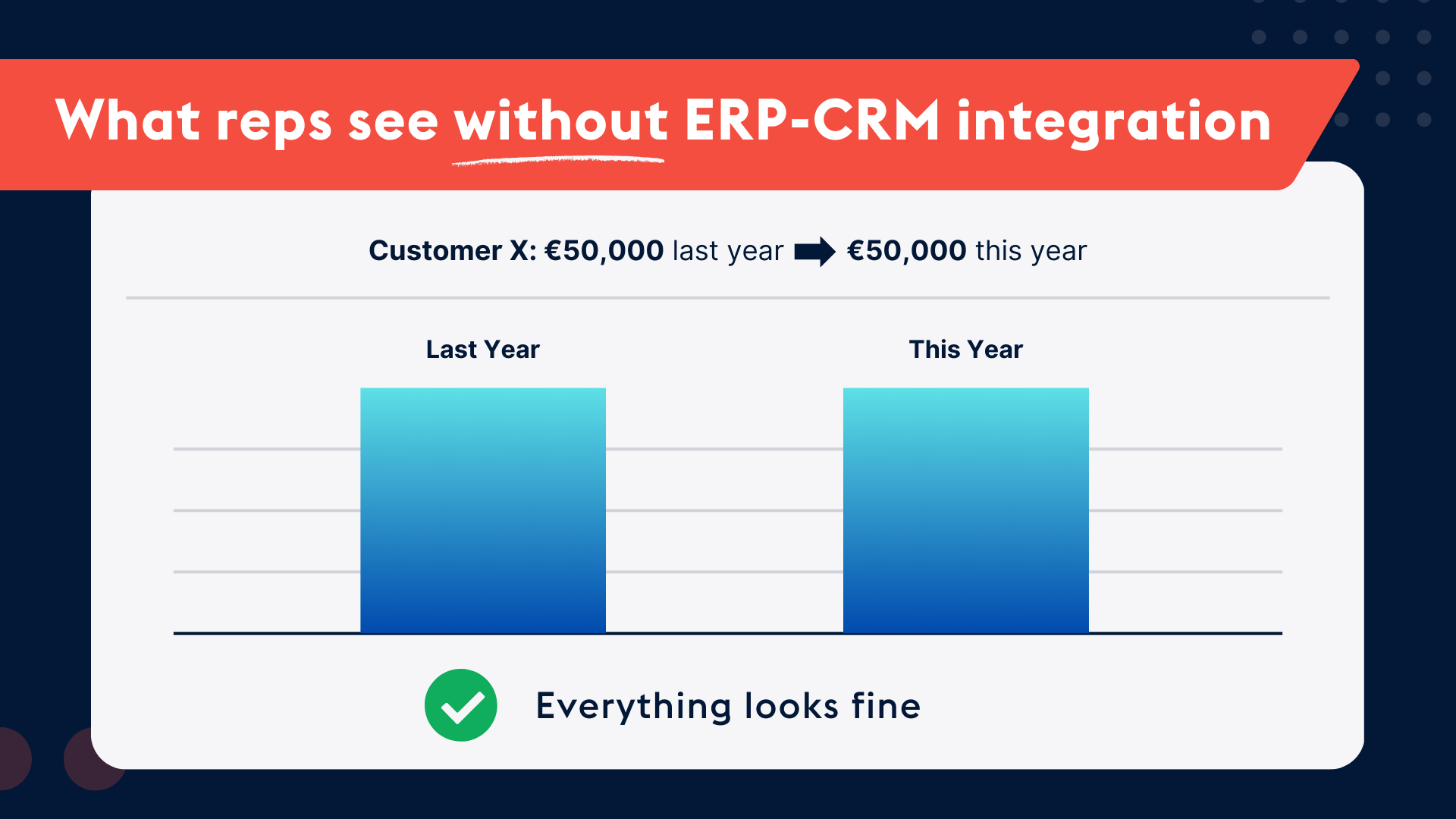
Your revenue with a key account looks stable. The monthly or quarterly numbers are holding steady. Everything feels fine.
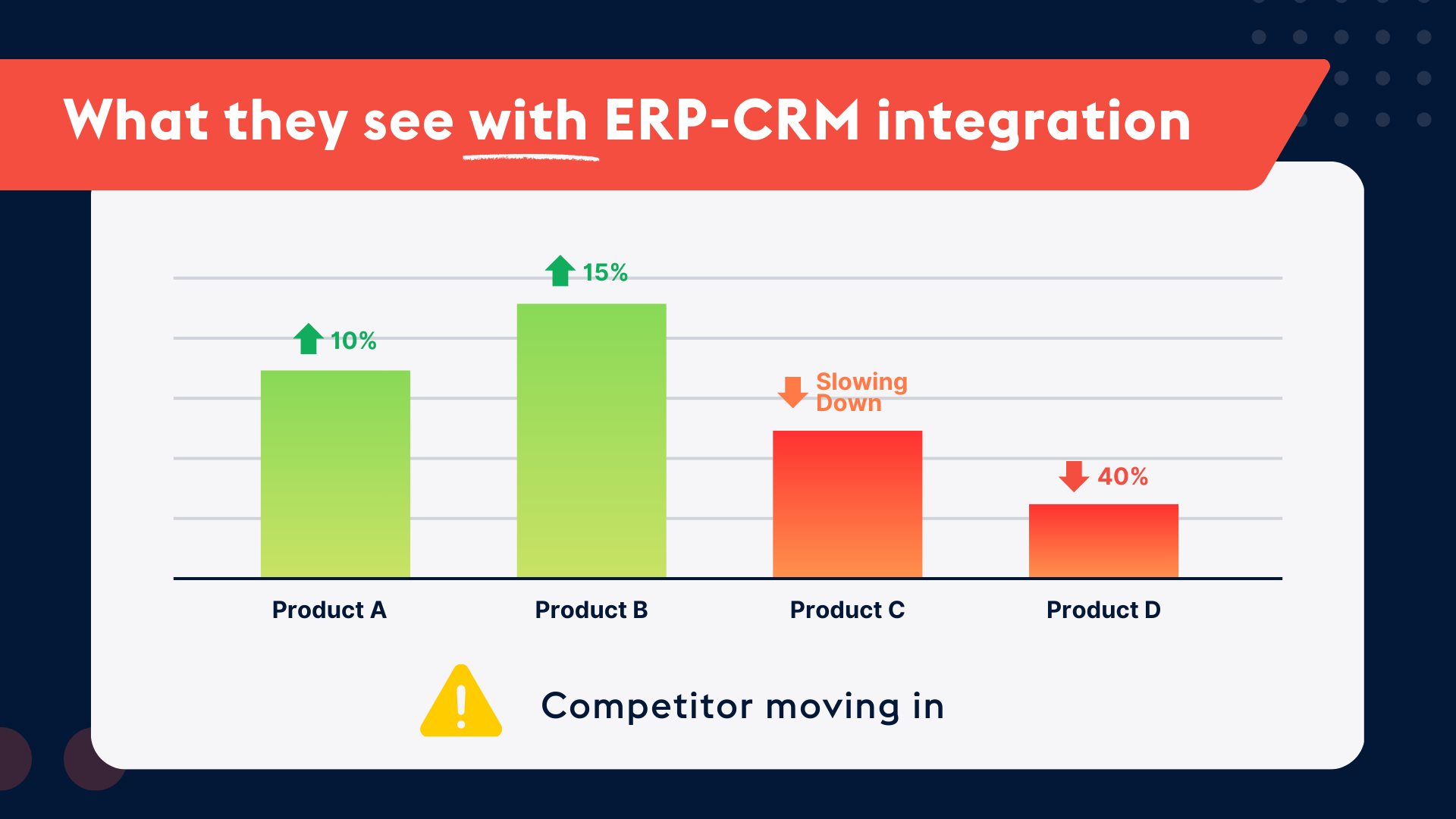
But one product category is quietly declining. A competitor has their foot in the door. Your rep doesn’t know yet – because that signal is buried in your ERP, invisible to the people who could act on it.
When you see less sales in Product A, it tends to have a knock-on effect — you see less sales the next quarter in Product B. It can be an indication that maybe you’re slowly losing a customer. But if your salesperson doesn’t have visibility into those trends, they’re going in every month thinking everything’s great, not realising the account is at risk.
By the time you realise what’s happened, it’s too late. The competitor hasn’t just won one product line, they’ve built enough trust to take more.
In your customer’s eyes, your sales rep is the company. When something goes wrong and your rep doesn’t know about it, they take the blame, even if it wasn’t their fault.
Finance messed up? Sales problem.
Delivery issue? Sales problem.
Customer upset about something they’ve already explained to three other people at your company? Definitely a sales problem.
Informed reps don’t just sell better. They protect the relationships your business runs on.
A deal closes, and your sales rep logs it in the CRM system. Then what?
Someone screenshots it. Emails finance. Updates a spreadsheet manually. Hopes nothing gets lost in translation.
This is how your business is running the moment after your sales team does its job.
“I know from personal experience that it’s so frustrating when you close a deal and it becomes this admin nightmare where you’re having to go through this whole process in one system and then replicate it in another system. And you’re like, there has to be an easier way to do this. It’s taken all the good out of making a sale,” Trevor lamented.
And here’s what gets lost in that handoff: payment terms. Special pricing. Delivery timelines. All those little nuggets of what’s been negotiated. Finance gets the basics but may miss the details. They invoice immediately when the customer was promised 60 days. The customer’s angry. Your rep looks incompetent. Trust erodes.
If one of your sales reps leave, what walks out with them?
If your customer relationships, order history, and account context live in their head where no one else can see them, you’re not just losing a salesperson. You’re losing the account.
And then the new rep comes in. They reach out to the customer. They ask basic questions the customer has already answered. The customer thinks: Do these guys communicate at all?
Your systems should maintain continuity. When someone new picks up an account, they should be able to pull up Sugar, review the full history, and walk into that first call prepared. Not starting from scratch. Not making the customer repeat themselves.
Here’s the thing about all of these problems: they’re not inevitable. They exist because your CRM and ERP systems were never designed to work together. Your ERP is trusted by finance, and maybe your CRM was added later to support growth. And teams compensate manually instead of connecting the systems properly.
But when you bridge that gap – when you give sales the financial and business context they need, when they need it – everything changes:
Reps become proactive instead of reactive.
When salespeople have complete account information at their fingertips, they stop scrambling and start planning. They can pull up their CRM 10-15 minutes before a call and see everything: order history, payment status, recent support cases, red flags. Instead of getting blindsided, they can steer conversations toward opportunities and address issues before customers bring them up. The numbers are right there, and the numbers don’t lie.
Confidence translates to trust.
When reps can answer questions on the spot instead of promising to “get back to you,” customers notice. They feel like they’re working with professionals who have their act together. And that perception matters, because trust takes months to build and seconds to damage.
And trust drives growth.
Better-informed salespeople maintain and grow the accounts they’re working with. They spot upsell opportunities hidden in ERP data. They identify declining product categories before competitors fully get their foot in the door. They navigate renewals with confidence because they understand the full financial picture. When sales teams have the information they need, pipeline forecasts become reliable, resource planning becomes accurate, and revenue growth becomes predictable rather than accidental.
When you integrate Sage ERP with SugarCRM, you’re not replacing either system. You’re making the invisible visible. Here’s what this looks like in practice:
Your sales rep opens an account in SugarCRM and sees:
• Complete order history (what they bought, when, how much)
• Payment status and outstanding invoices at a glance
• Product category breakdowns showing what they’re buying more of — and critically, what they’ve stopped buying
• Seasonal patterns and margin trends that reveal account health
After closing a deal, the handoff is automatic:
• Opportunity moves to closed-won in SugarCRM
• Integration automatically pushes order to Sage ERP with every detail intact (payment terms, pricing, delivery schedule)
• Finance gets the complete order
• The customer gets exactly what was promised
And everyone works from the same truth
• Sales sees financial context
• Finance sees sales pipeline
• No one’s working from outdated information
• No one’s asking questions that should already be answered
Sage stays the system of record for your financials, and SugarCRM becomes the system of record for your customer relationships – backed by real financial data, not just notes and good intentions.
And if you’re thinking about AI this year – which most sales leaders are – here’s what nobody’s telling you: AI doesn’t fix an information gap, it amplifies it. If your CRM is missing financial context from your ERP, your AI-powered insights, recommended next steps, and forecasting tools are all modelling off an incomplete picture of your customer. You’re not getting your best salesperson’s instincts at scale. You’re getting your most uninformed ones, faster.
Before you invest in AI-powered sales tools, ask yourself: what is the AI learning from? If the answer is “a CRM that’s disconnected from our financial reality,” you’re building on a broken foundation. To learn more about why your pipeline data matters before you layer AI on top of it, read our previous post on building a pipeline that actually converts.
None of this has to be normal. The disconnected systems, the manual workarounds, the information gaps – they exist because integration used to be complex, expensive, and fragile. But that’s changed. Connecting Sage and Sugar is no longer a six-month IT project. It’s a decision to stop tolerating friction that shouldn’t exist in the first place.
If this sounds familiar, if your sales team is operating with a hidden visibility gap that’s quietly slowing revenue, let’s talk.
If your sales team is managing key accounts without full visibility, we’ll show you exactly what that costs you and what closing the gap looks like in practice.
Book a 20-minute integration strategy session with us and we’ll assess your setup, discuss options, and create a recommendation tailored to your needs. No obligation. Just a clear picture of what’s possible when your systems actually work together.
Because your teams work too hard to be working around disconnected systems.