The public sector is facing a growing demand for clearer, faster, and more user-friendly services. Citizens want 24/7 access, an intuitive online experience, and transparent updates that show how their request or application is progressing.
These are fair and reasonable expectations, but they create pressure for public sector organisations working with tight budgets, long-standing systems and strict procurement and compliance requirements.
Most public bodies recognise these pressures and, in many cases, already know which services need improvement. But digital transformation means connecting older systems, aligning numerous stakeholders and introducing new processes without overwhelming staff.
Across the UK and Ireland, Provident CRM supports public sector organisations facing these challenges. Our focus is on helping teams move away from fragmented processes and towards secure, reliable and scalable systems built on CRM technology — empowering citizen service modernisation.

Public sector projects rarely involve a single system change. They usually require an environment that is able to support departments with different processes, responsibilities and oversight requirements.
Provident CRM delivers this by creating a full digital ecosystem around each project — from the underlying infrastructure to the integrations, access portals and security measures that keep services running reliably.
Rather than focusing on one component in isolation, Provident CRM designs systems that operate as a connected whole, giving teams a stable foundation they can develop over time. This setup is well-suited to public sector environments as it supports compliance, establishes governance structures and enables collaboration between multiple stakeholders.
Our work is rooted in understanding the complexity of public sector structures and simplifying them with secure, reliable digital solutions. We support organisations with:
A well-designed CRM platform quickly improves how citizens experience public services. Self-service tools allow people to complete tasks online, while automated steps reduce delays and remove unnecessary manual work.
Structured workflows also ensure that every case follows the same clear path, giving citizens a consistent experience regardless of which department handles their request.
In addition to enhancing the user experience, these process improvements free staff to focus on assessment and decision-making rather than routine administration, resulting in faster responses and clearer communication with the public.
CRMs drive stronger decision-making by bringing together information that would otherwise sit in separate systems or offline records.
When data is unified, teams can view complete histories, understand workloads and monitor how services are performing. With this level of clarity, reporting becomes more accurate, strategic planning becomes more grounded, and demand is easier to anticipate.
Digital transformation progresses quickest when public bodies commit to a shared system and work collaboratively with an experienced CRM partner to bring it to life. The national ePlanning platform that we developed with Ireland’s Local Government Management Agency (LGMA) demonstrates how this works in practice.
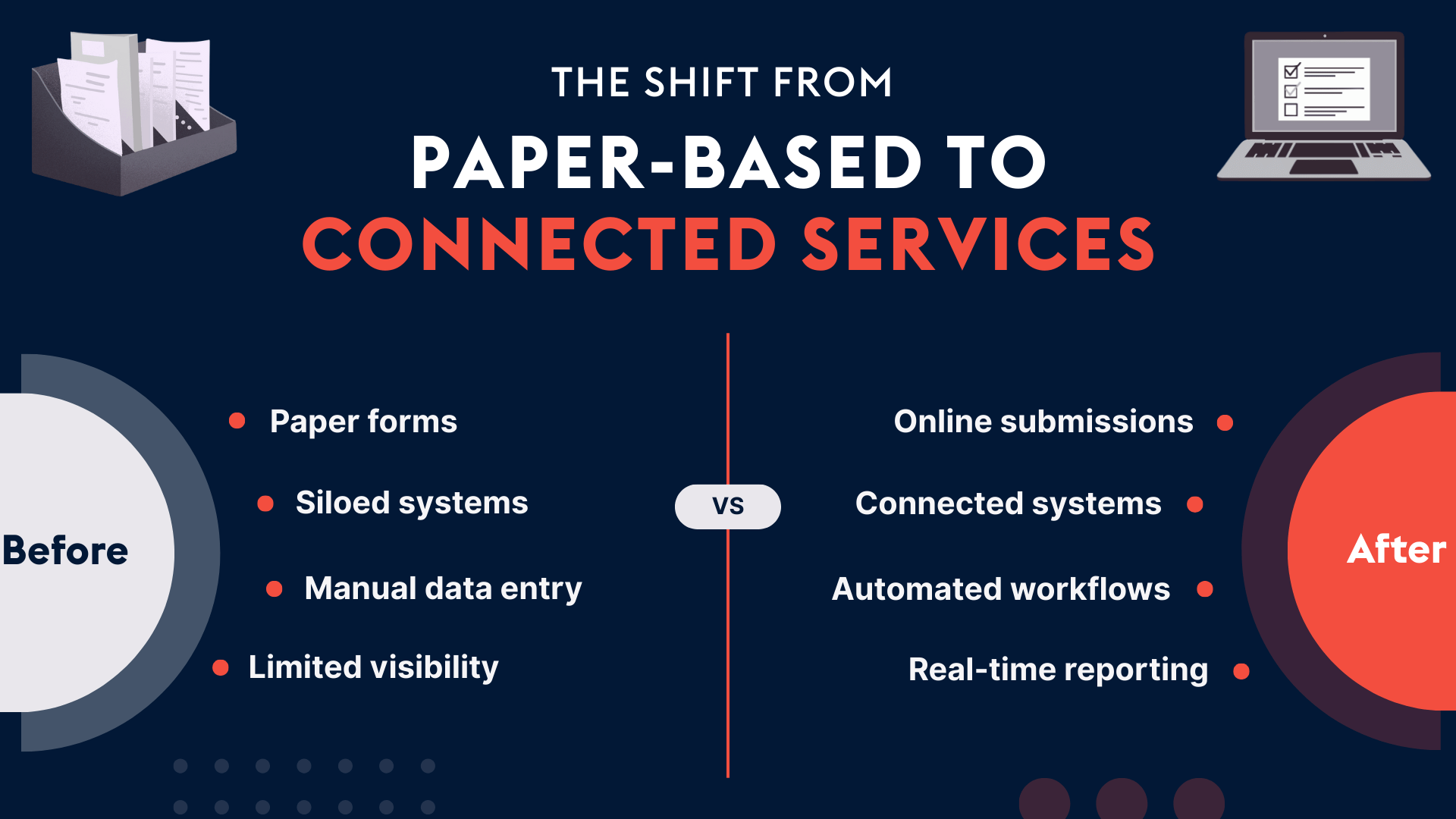
Planning applications in Ireland are traditionally paper-heavy and inconsistent. Citizens often have to bring large bundles of documents to their local authority, restricted by office hours and the need to submit multiple printed copies.
Each of the LGMA’s 31 councils operated its own processes and systems, which led to manual data entry, duplicated work, and limited visibility between authorities. For applicants, the experience was cumbersome. For staff, the workflow left little time for assessment and created variations in service quality depending on where a person lived.
The lack of a unified system also made reporting difficult and provided no national view of trends — highlighting the need for efficiency, accessibility and consistency across all authorities.
Provident CRM partnered with the LGMA to create one national online planning system that would replace these fragmented, paper-based processes. The goal was to give citizens and planning agents a single, consistent digital route for submitting applications, while giving councils a shared workflow and the ability to access and manage applications centrally.
To support this vision, the platform needed to connect with multiple existing planning systems across all authorities, handle national reporting, and offer a secure, reliable foundation for long-term use.
Delivering a national service required infrastructure that could scale while remaining secure and integrating with diverse local authority systems.
Provident CRM implemented and customised SugarCRM as the central engine for managing planning applications, storing documents, automating workflows and creating reports.
A Drupal portal provided an online entry point for citizens and planning agents, allowing applications to be submitted, documents to be uploaded, and progress to be tracked without relying on office hours. We then built custom integrations to connect SugarCRM with each authority’s planning system, ensuring a standardised flow of data regardless of local configurations.
To keep the platform secure and stable, Provident CRM built and maintained the underlying infrastructure, conducted deep performance and penetration testing, and worked with network teams across the sector.
A phased national rollout began with one local authority, then two, gradually expanding until the system could support high volumes of applications and seasonal peaks in demand. We also supported staff training and change management, with continuous engagement through daily support and weekly coordination meetings — a partnership the LGMA describes as “integral to the whole process.”
The LGMA’s online planning portal has reshaped how planning applications are submitted and managed across Ireland. Over 5,000 planning agents and 200 staff across 28 authorities now use the system daily.
For citizens and planning agents:
For local authorities:
For national planning insight:
The ePlanning platform was delivered through close collaboration between the LGMA, local authorities, Provident CRM, and several technology partners. Regular communication, shared planning and a clear aim shaped every stage of the rollout.
This collaboration was recognised at the 2025 Public Sector Digital Transformation Awards, where the LGMA won Most Collaborative Project. The award demonstrates the strength of the partnership and the transformative impact the platform is already having on citizens and councils nationwide — and signals what is possible for future innovation in the public sector.
Provident CRM continues to work with the LGMA as a long-term partner, supporting enhancements, ongoing maintenance and the platform’s deployment to the remaining local authorities.
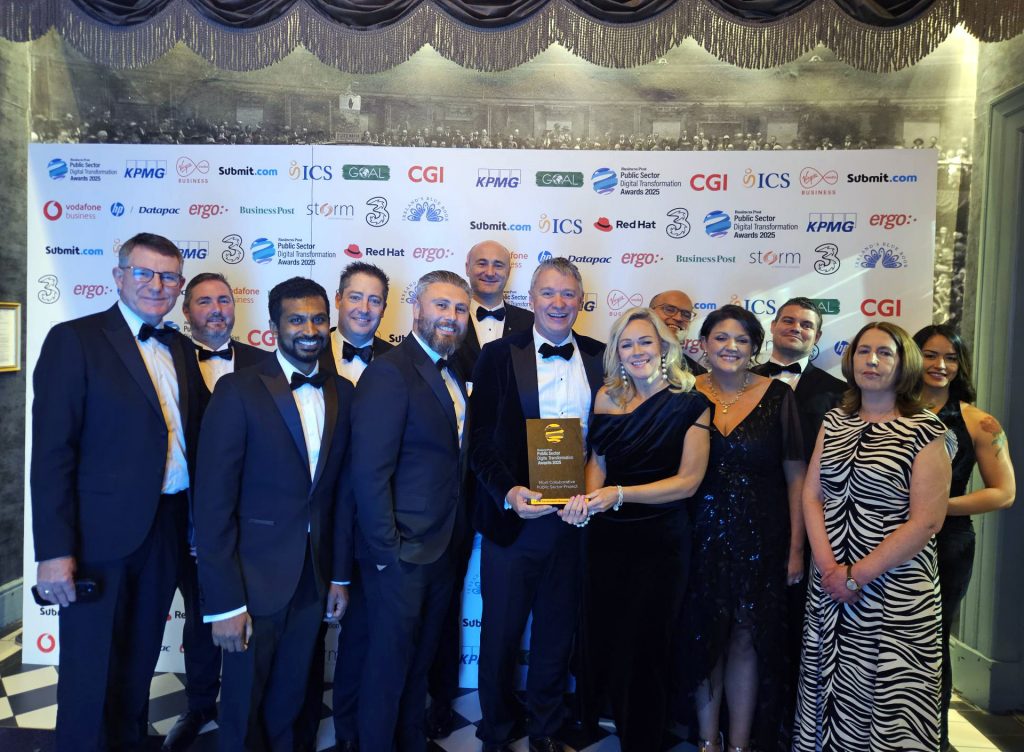 The Provident CRM team celebrated alongside the LGMA after their win at the Business Post Public Sector Digital Transformation Awards 2025
Public sector digital transformation projects work best when they move at a pace teams can manage and when changes feel helpful rather than disruptive. From our experience, three principles form the DNA of successful public sector digital transformation programmes:
Introducing everything in one go can create pressure for staff and make issues harder to resolve. Smaller phases give teams time to adjust, highlighting gaps early and building confidence as the system evolves. Progress is steadier, and changes are easier to absorb.
Most public sector programmes involve several departments, external partners, and operational teams. Bringing these groups together from the beginning helps create a solution that reflects how your organisation works day to day. Early involvement builds shared understanding and keeps communication open throughout the project.
Long-standing systems often hold valuable information and support critical processes. Rather than removing them, effective digital transformation connects these systems to newer platforms so that data can move easily between them. This integration protects previous investment while improving workflows and access to information.
Public bodies see the best results when technology is supported by a strong partnership. Provident CRM combines technical expertise with open communication and shared ownership, working closely with teams to keep systems stable, improve them over time and respond to emerging needs.
These principles support long-term resilience, providing a foundation that can evolve with policy, people’s expectations and technology. We remain committed to helping public institutions build smarter, data-driven and citizen-focused services across the UK and Ireland.
The next phase of public sector digital transformation will be shaped by tools and approaches that give teams clearer insight and more flexibility to meet changing demands. Key areas to watch closely include:
If your organisation is exploring ways to modernise systems, connect teams or deliver better citizen services, we’d love to help you map your digital transformation journey.